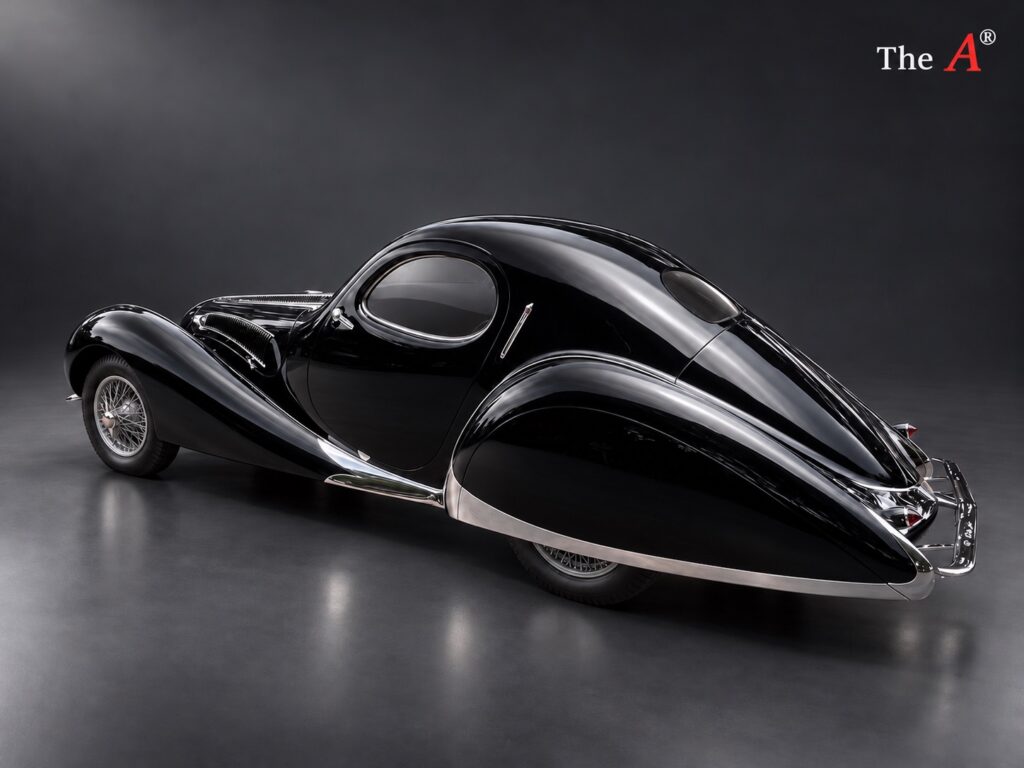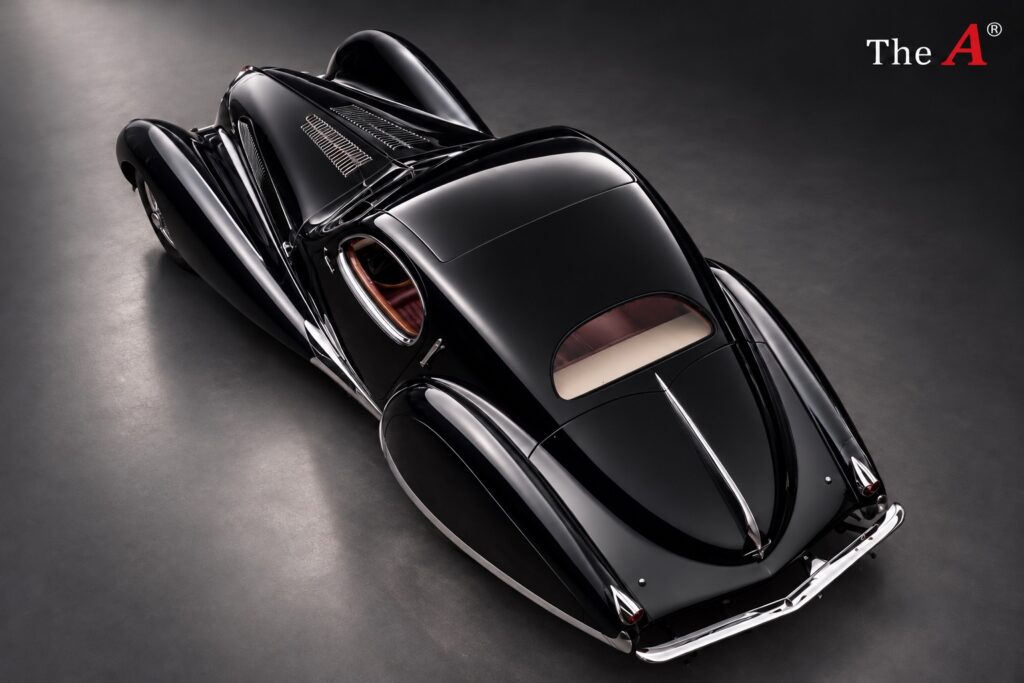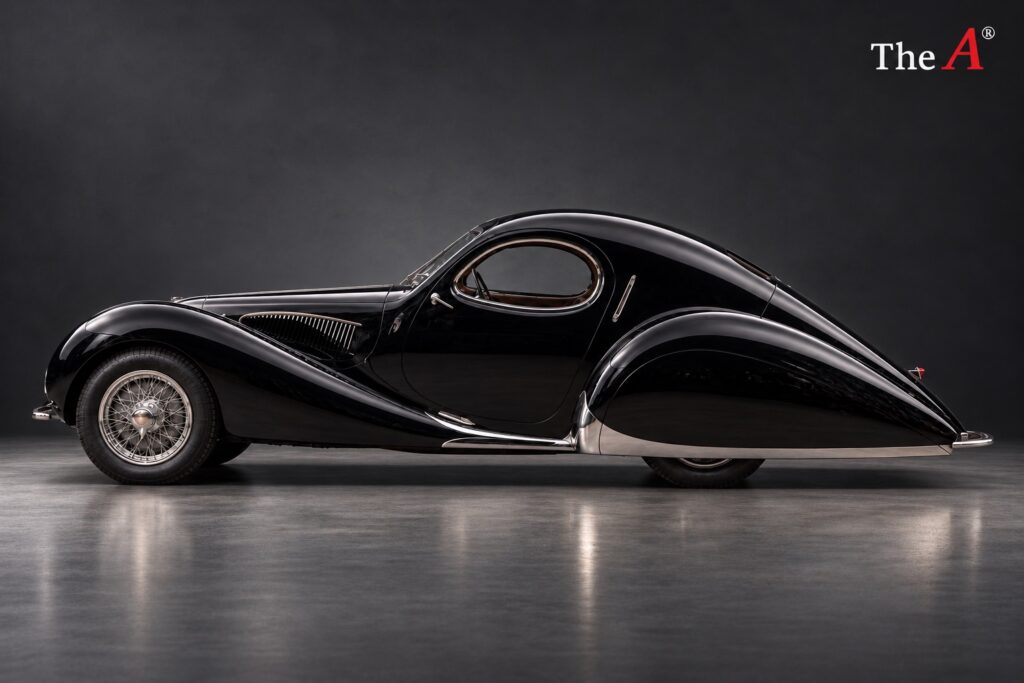

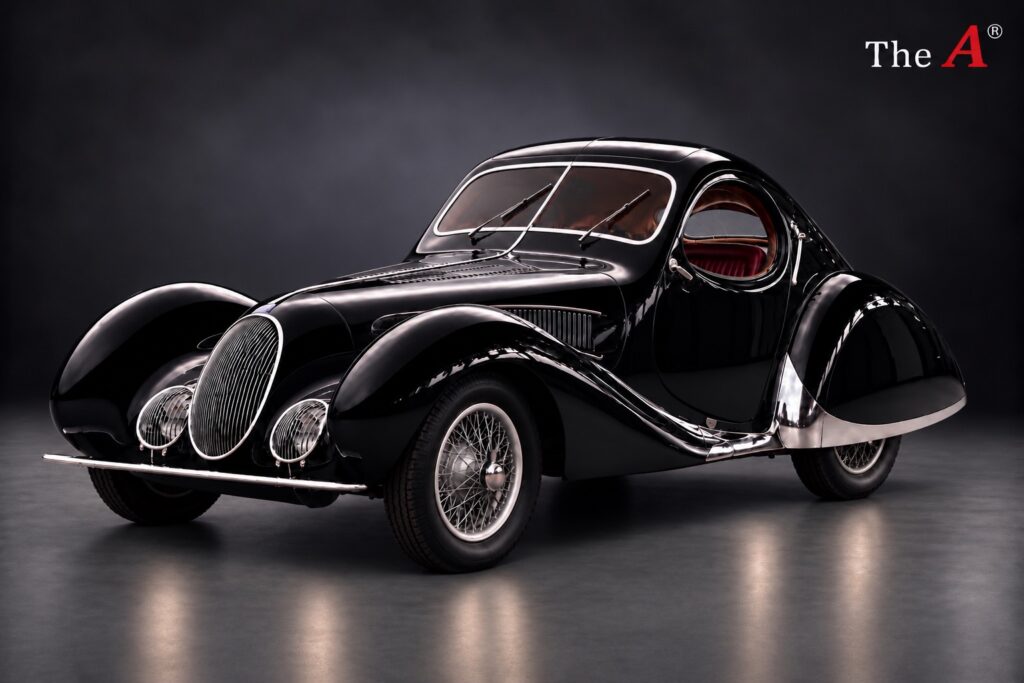
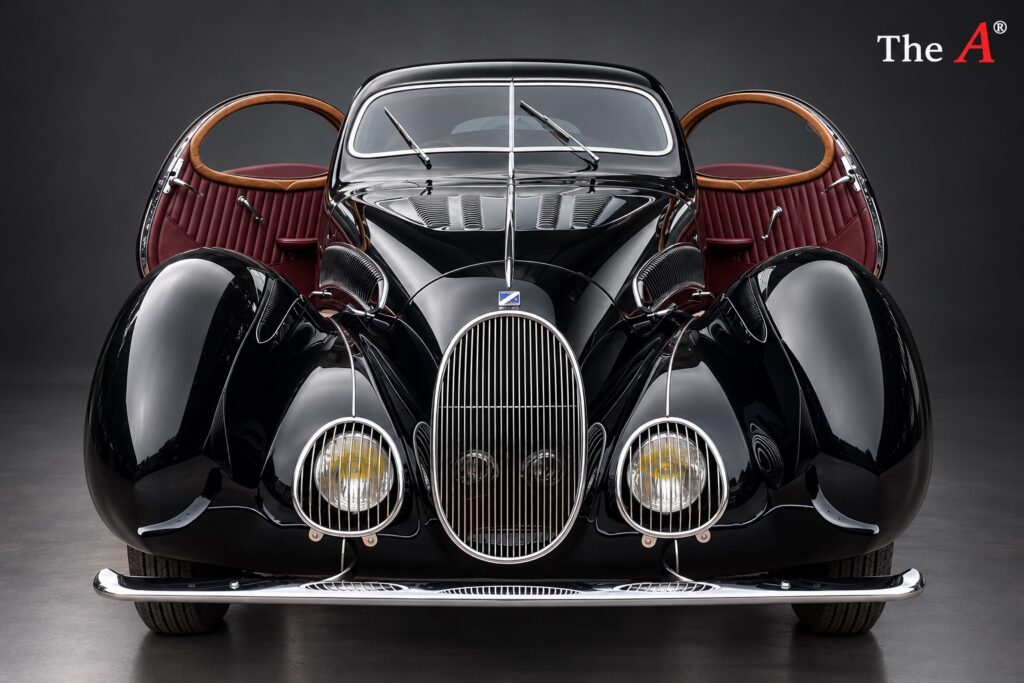
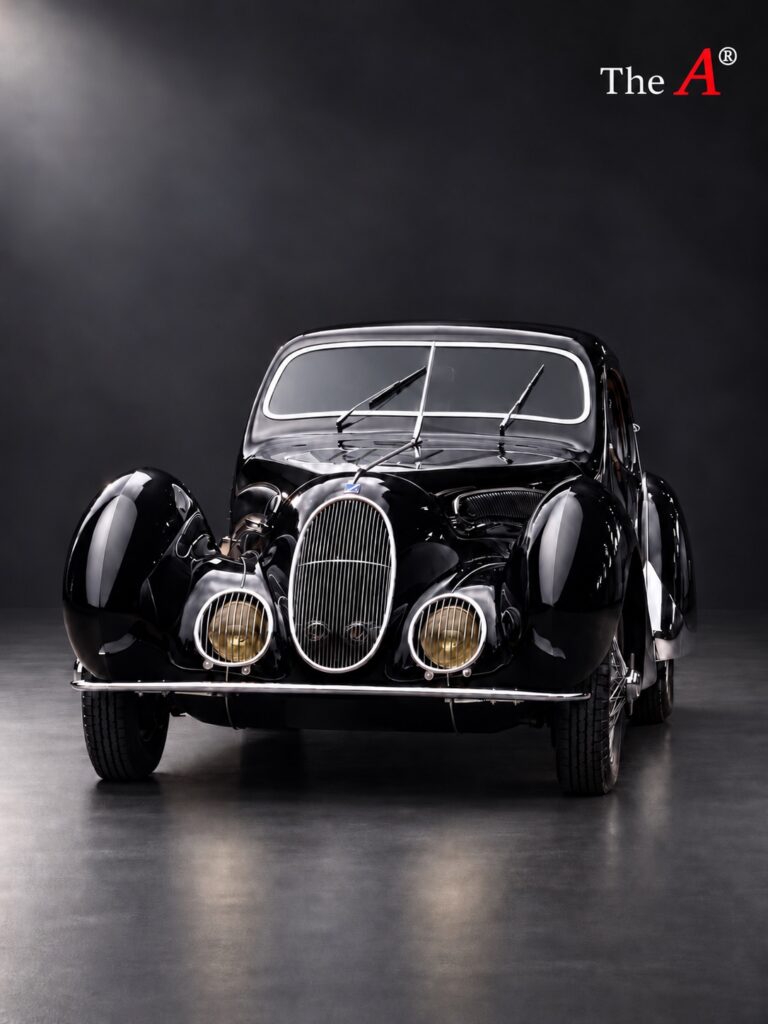
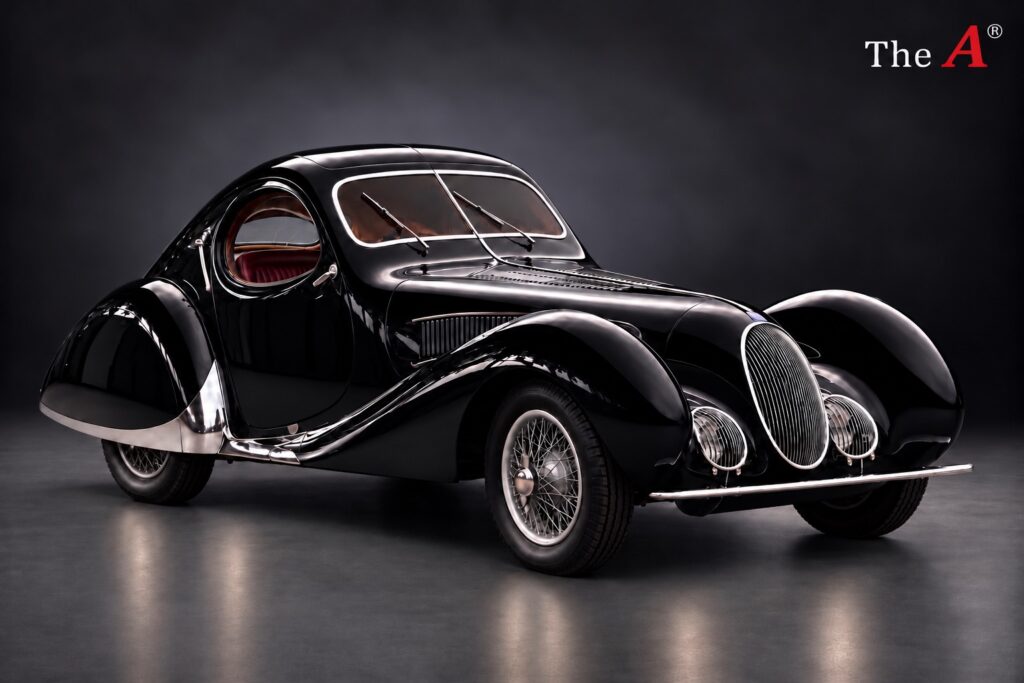
The Talbot-Lago T150 C «Goutte d'eau» — Figoni & Falaschi — 1939
One of the highlights of French prewar coachbuilding. A unique three-seater model.
Some automobiles hold a special place in history: the one where mechanical excellence meets artistic creation. The Talbot-Lago adorned by Figoni & Falaschi belongs to this select group. Its «water drop» lines, its sculptural design and the balance of its volumes embody an era when the greatest French coachbuilders hand-crafted automobiles designed as individual works of art.
In the 1930s, Anthony Lago gave Talbot a new ambition, combining elegance, engineering and competition. At the same time, Joseph Figoni, associated with Ovidio Falaschi in 1935, developed an aesthetic language of remarkable freedom. The enveloping wings, continuous curves and fluted silhouettes reflected the fascination of the time for aerodynamics. From this meeting, some of the most emblematic achievements of the French coachbuilder emerged, including the famous coupes known as the «Goutte d’eau».
The copy proposed by The A
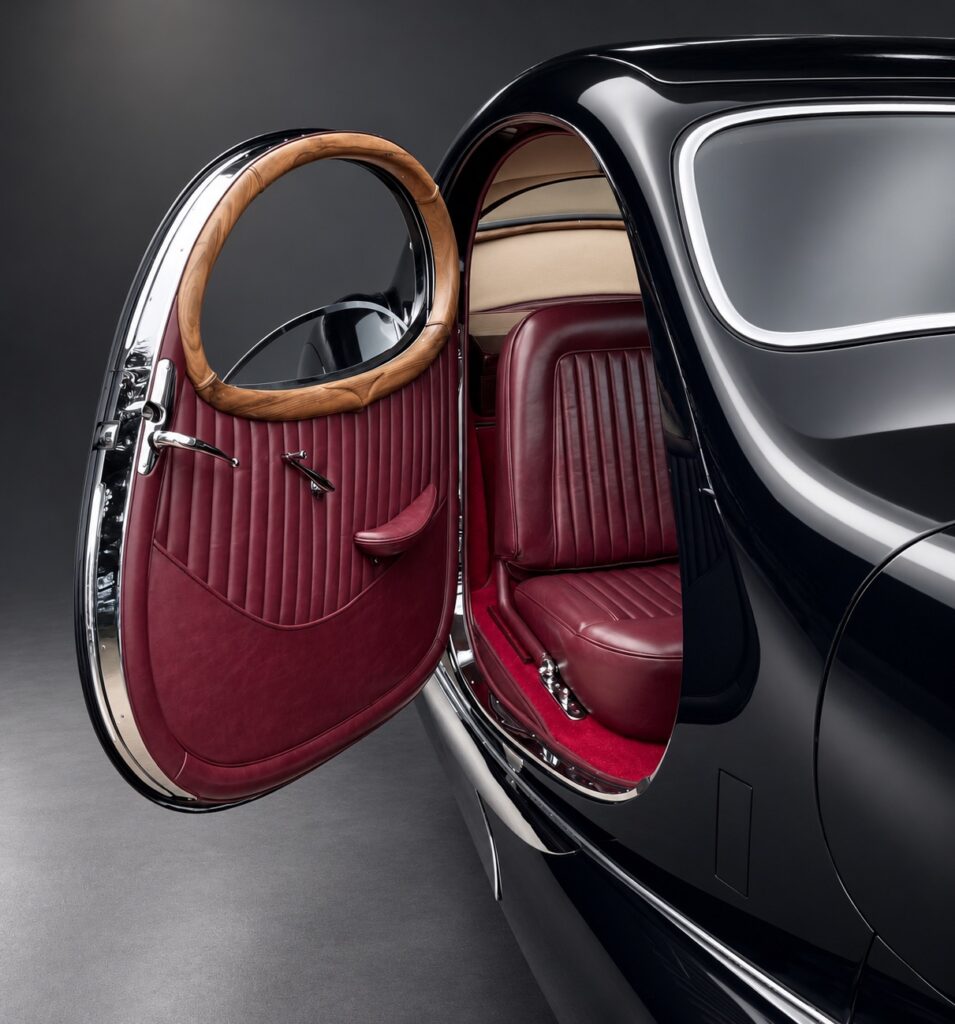
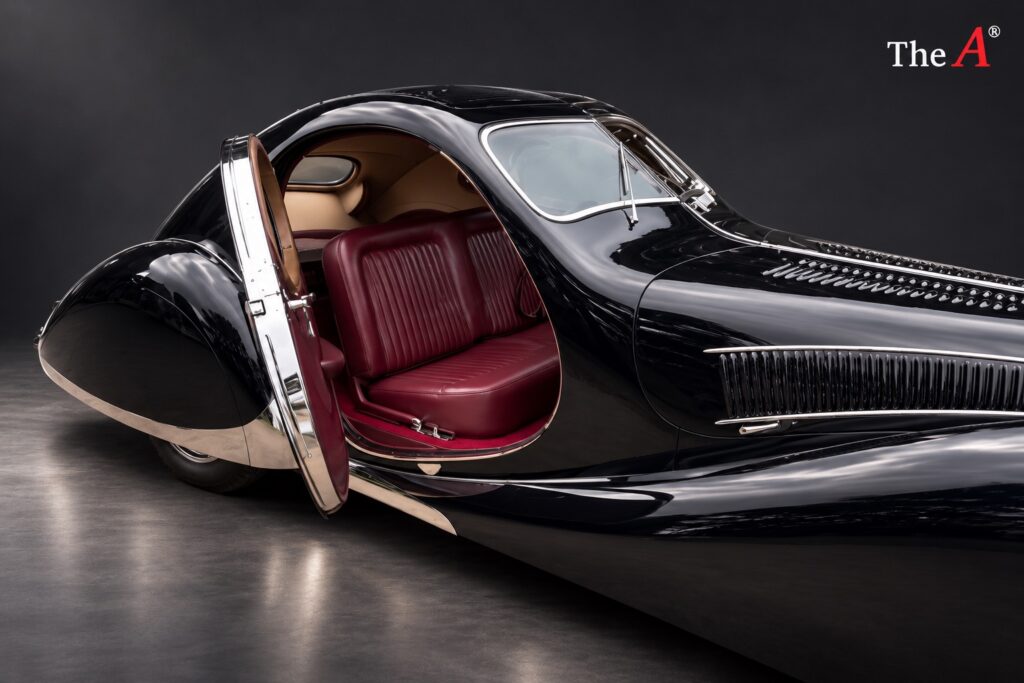
This 1939 Talbot-Lago T150 C, bodied by Figoni & Falaschi, stands out for its long wheelbase chassis of 2.95 meters and its unique three-seater configuration. This unique feature gives it a distinct identity within this family of bespoke automobiles.
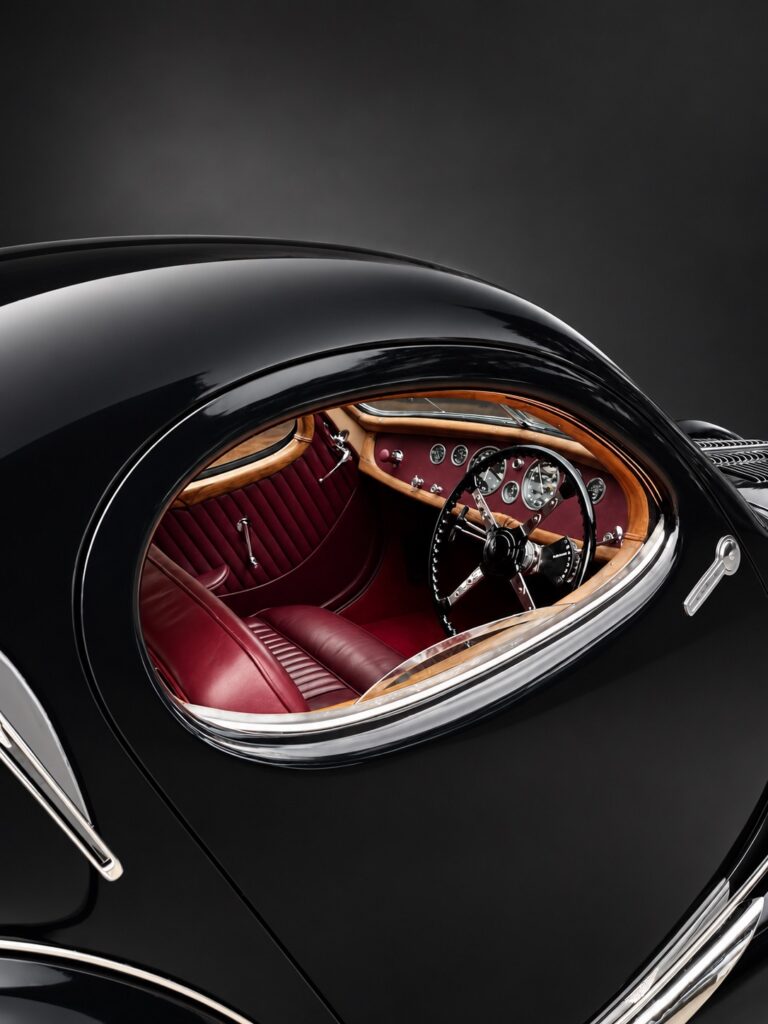
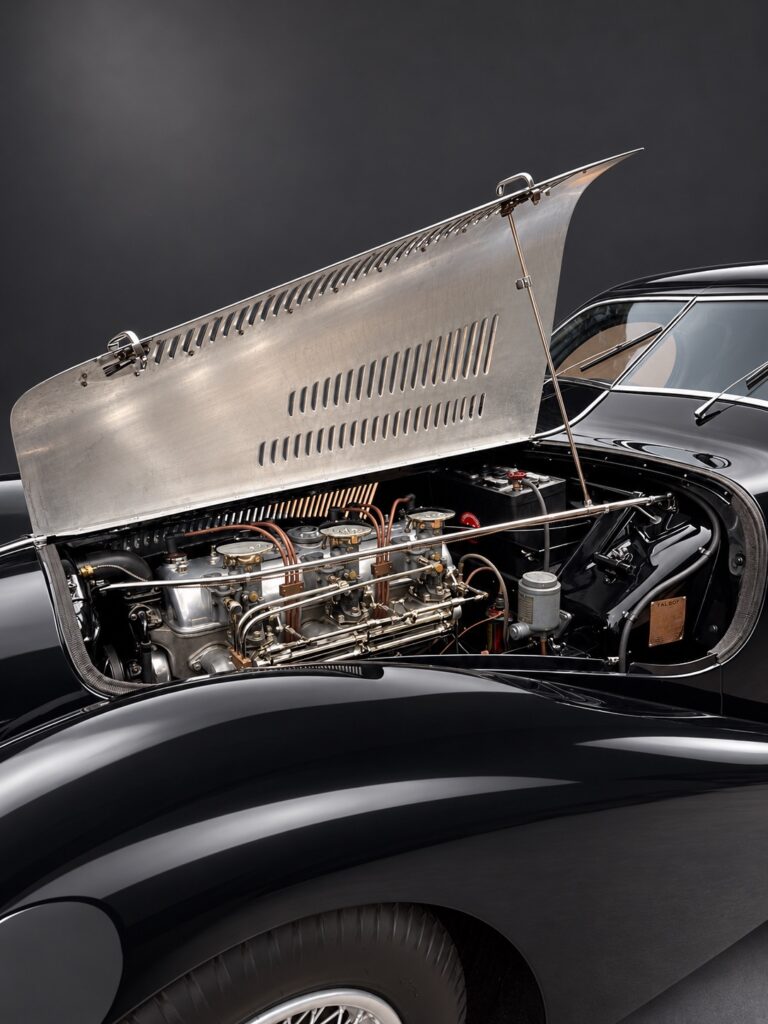
A French specification and not intended for export, it is equipped with a 4.0-liter engine powered by EX32 carburettors. Its design combines a black body with a red interior, a combination that emphasizes the curves of its silhouette and the richness of its interior.
The example car has undergone a restoration in accordance with historical data and original specifications. A comprehensive restoration file, historical documents and photographs accompany the car, allowing the public to appreciate the work carried out and the elements on which it is based. The vehicle has also undergone an inspection and certification of compliance.
A first-class collector's car
The rarity of the Figoni & Falaschi creations stems both from the limited number of cars produced and from the individual character of each one. Their proportions, details and configurations bear witness to a craftsmanship that serial production could not replicate.
This T150 C combines an emblematic bodywork, a unique configuration and a documented restoration. It is aimed at a collector for whom the historical importance, the quality of execution and the strength of the design constitute the first criteria for purchase.
A museum piece whose purpose remains that of a car: to be admired, preserved and passed on.
A masterpiece of art that certainly deserves its place in a collection of very high taste.
Historical and restoration file on request. Presentation by appointment at The A.